

Best Way to Plan a Surprise Proposal Without Her Knowing
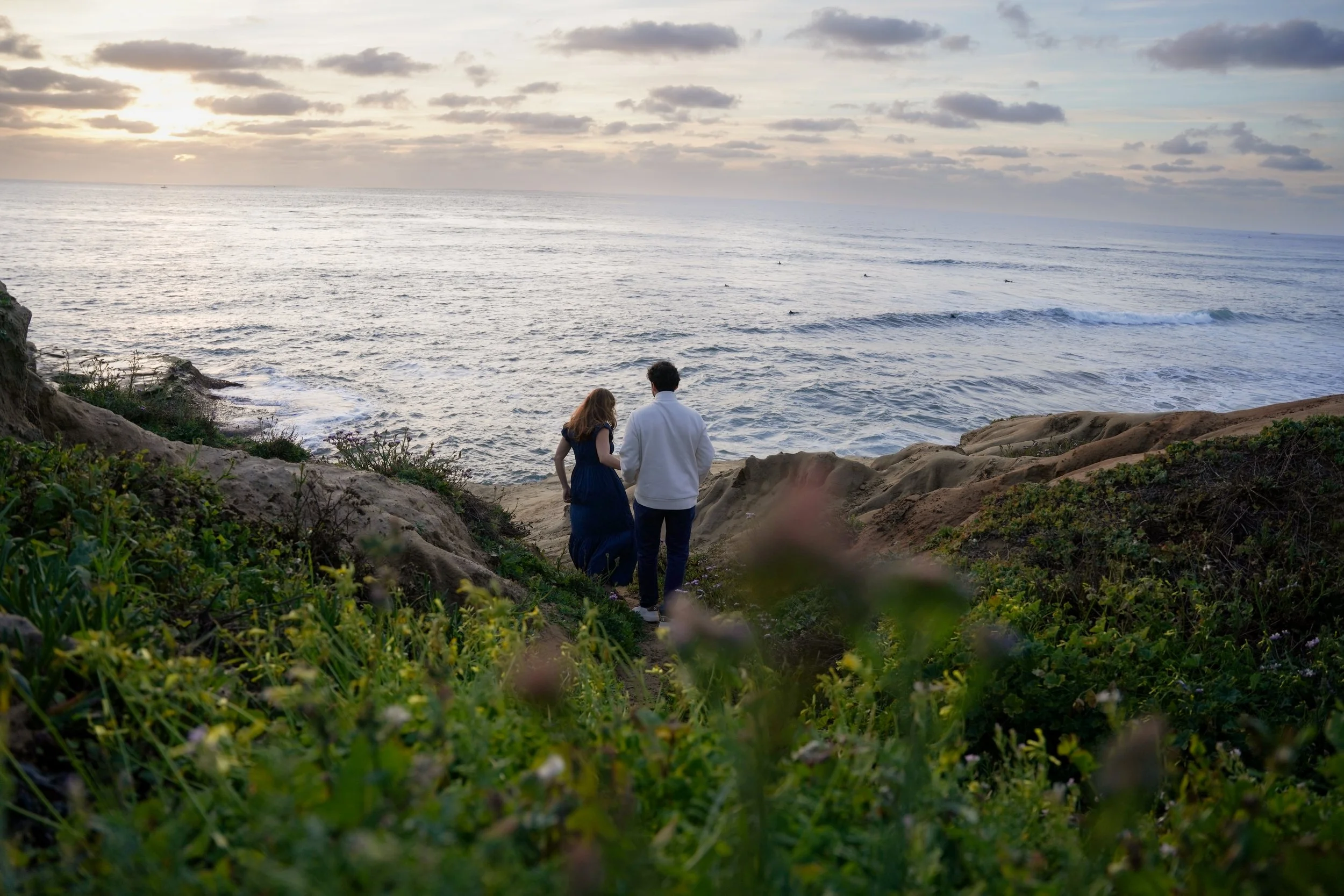
Just moments after the surprise proposal at Sunset Cliffs, he helps his fiancée down the rugged coastal path, steady and protective as the ocean glows behind them.
(How to Keep a Surprise Proposal Completely Believable)
Most surprise proposals aren’t discovered because of the ring.
They’re discovered because of behavior.
If you want to propose without her knowing, the goal isn’t secrecy — it’s normalcy.
The moment should feel like a natural part of the day, not a staged interruption.
The Real Secret: Don’t Act Different
The biggest giveaway is sudden personality change.
If you normally:
joke around
take photos
stop at viewpoints
plan spontaneous outings
Keep doing that.
If you normally don’t:
don’t suddenly start.
Consistency protects the surprise.
If You Need to Change Something, Prime It Early
If there are things you don’t normally do — but plan to do on proposal day — introduce them gradually.
For example:
If you rarely dress up, plan a few nice dinners leading up to it.
If you don’t usually take photos together, start taking more photos on your phone.
If you don’t often plan intentional outings, schedule a couple beforehand.
Ideally, this starts months in advance.
But if you’re short on time, even a few weeks helps normalize the shift.
Behavior patterns are what people notice.
If proposal day suddenly feels elevated or unusually planned, suspicion increases.
If it feels like part of a trend you’ve already started, it blends in naturally.
The goal isn’t deception.
It’s familiarity.
Don’t Over-Engineer the Day
The more complicated the plan, the more noticeable it becomes.
Avoid:
overly specific timing
forced detours
unusual outfits “just because”
vague answers about where you’re going
The stop should make sense within the day.
A surprise proposal works best when it feels like a spontaneous pause, not a dramatic reveal being guarded for hours.
Prime the Environment Early
If you never ask strangers to take your photo together, start earlier in the trip.
Small moments like:
“Can you grab a quick photo of us?”
This makes the real stop feel normal.
Behavior rehearsal protects the surprise.
Let Someone Else Handle the Details
If you’re coordinating with a photographer or planner, finalize everything beforehand.
Constantly checking your phone:
raises suspicion
changes your posture
shifts your attention
Once the day begins, you shouldn’t be managing logistics.
Presence keeps the moment believable.
Keep the Circle Small
Including too many friends increases risk.
We’ve seen:
familiar cars parked nearby
people hiding in plain sight
overexcited friends unintentionally giving it away
If friends are involved, fewer is safer.
Control Location Sharing
If you share location through Google Maps or Find My, pause it temporarily.
Unexpected stops can raise questions quickly.
This small detail has revealed more proposals than the ring itself.
Choose a Natural Pause
The best proposals happen at natural breaks in the day:
a scenic overlook
a coastal walk
before dinner
after arriving somewhere beautiful
Not at an awkward forced stop.
The more the moment fits the flow of the day, the less she suspects.
What Actually Happens When You Kneel
From experience photographing surprise proposals in crowded settings, quiet parks, and fully private venues, the result is almost always the same.
When you kneel, everything else disappears.
Noise fades.
People fade.
Planning fades.
Only the two of you remain.
If the lead-up felt natural, the surprise lands fully.
The Core Principle
To propose without her knowing:
Act like yourself.
Plan quietly in advance.
Keep the structure simple.
Let the moment interrupt the day naturally.
The best surprise proposals don’t feel dramatic beforehand.
They feel effortless — until they aren’t.
Start Your Journey With Us Here
Surprise Proposal FAQ
How long does a proposal actually last?
The kneeling moment itself is short — usually 20–40 seconds. The full experience typically lasts 5–10 minutes before portraits.
Will she notice the photographer?
Most people don’t. The photographer blends into the environment before you arrive.
What if the location is crowded?
Positioning matters more than privacy.
Should I say something before getting on one knee?
Yes. A short sentence slows the moment and prevents rushing.
Where should I stand during the proposal?
Face open scenery rather than distractions.
What if something unexpected happens?
Stay calm and continue naturally.
Is sunset the only good time to propose?
No. Many successful surprise proposals happen earlier in the day.
Do I need to rehearse?
No memorizing needed.
When should I book a proposal photographer?
Earlier contact allows flexibility.
What knee should I propose on?
Traditionally the left knee, but stability matters most.
